
The T Cell Engager Landscape Is Maturing - Here’s What the Data Shows
The T cell engager (TCE) field is no longer emerging, it is rapidly maturing. New data from Beacon Graphs reveals sustained and accelerating growth across discovery, disclosure, and early development, signaling renewed industry confidence in this powerful therapeutic modality.
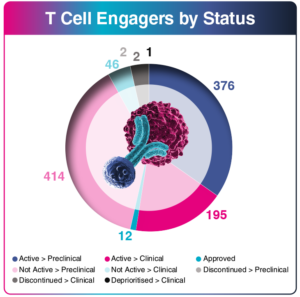
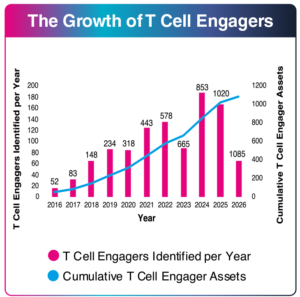
Over the past five years alone, the global T cell engager landscape has expanded by 88%, reflecting both scientific innovation and hard-earned learnings around safety, tolerability, and clinical translation.
A Growing and Diversifying Global Pipeline
Beacon Graphs’ latest analysis now identifies over 1,000 cumulative T cell engager assets worldwide, spanning oncology and beyond. Importantly, year on year growth is not slowing, pipeline expansion is continuing into 2026, underscoring the durability of investment and belief in the modality.
Three data points highlight the momentum:
- More than 1,000 T cell engager assets have now been disclosed globally
- 2024 marked a record year for new TCE disclosures, following a period of recalibration driven by early clinical safety insights
- In 2026 alone, 65 new T cell engager programs have already been identified to date
This resurgence reflects a more sophisticated generation of TCE programs, ones designed with deeper biological understanding, improved molecular engineering, and clearer clinical strategies from the outset.
From Early Lessons to Smarter Design
Early waves of T cell engager development surfaced critical challenges, particularly related to cytokine release, off tumor toxicity, and durability of response. Rather than slowing the field, those insights have reshaped it.
Today’s pipelines increasingly emphasize:
- Next generation architectures, including co stimulatory designs and tumor microenvironment activated TCEs
- Enhanced specificity through conditional activation and affinity tuning
- Earlier integration of translational data to guide target selection and molecular design
The result is a more disciplined, data driven approach, one that aligns discovery, translational science, and early clinical development more tightly than ever before.
Clinical Strategy Is Now a Differentiator
As T cell engagers move forward, success is no longer defined solely by molecular novelty. The programs advancing most effectively are those built with clear plans for:
- Dosing optimization and step up strategies
- Proactive safety and toxicity mitigation
- Resistance mechanisms and biomarker strategy
- Regulatory readiness earlier in development
This shift highlights an important inflection point for the modality: engineering excellence must now be matched by clinical and operational rigor.
Why This Matters Now
The scale and pace of growth revealed in the Beacon Graphs dataset make one conclusion clear, T cell engagers are transitioning into a mainstream therapeutic class.
This momentum is reflected across the ecosystem, including forums such as the 8th T Cell Engager Therapeutics Summit, which brings together biotech and pharma teams working across discovery, translational research, and early clinical development. As the field matures, collaboration and transparent data sharing will continue to play a critical role in accelerating progress.
Data Will Separate the Leaders from the Rest
As competition intensifies, the teams best positioned to succeed will be those that combine:
- Robust biological insight
- Advanced molecular engineering
- Real world clinical data
- A clear path to IND and beyond
Beacon Graphs continues to track and analyze this rapidly evolving landscape, providing a data backed view of where the field is heading, and where opportunities remain.
Interested in exploring more insights from the T cell engager pipeline?
Beacon Graphs delivers ongoing analysis to help teams understand trends, benchmark progress, and make smarter strategic decisions.
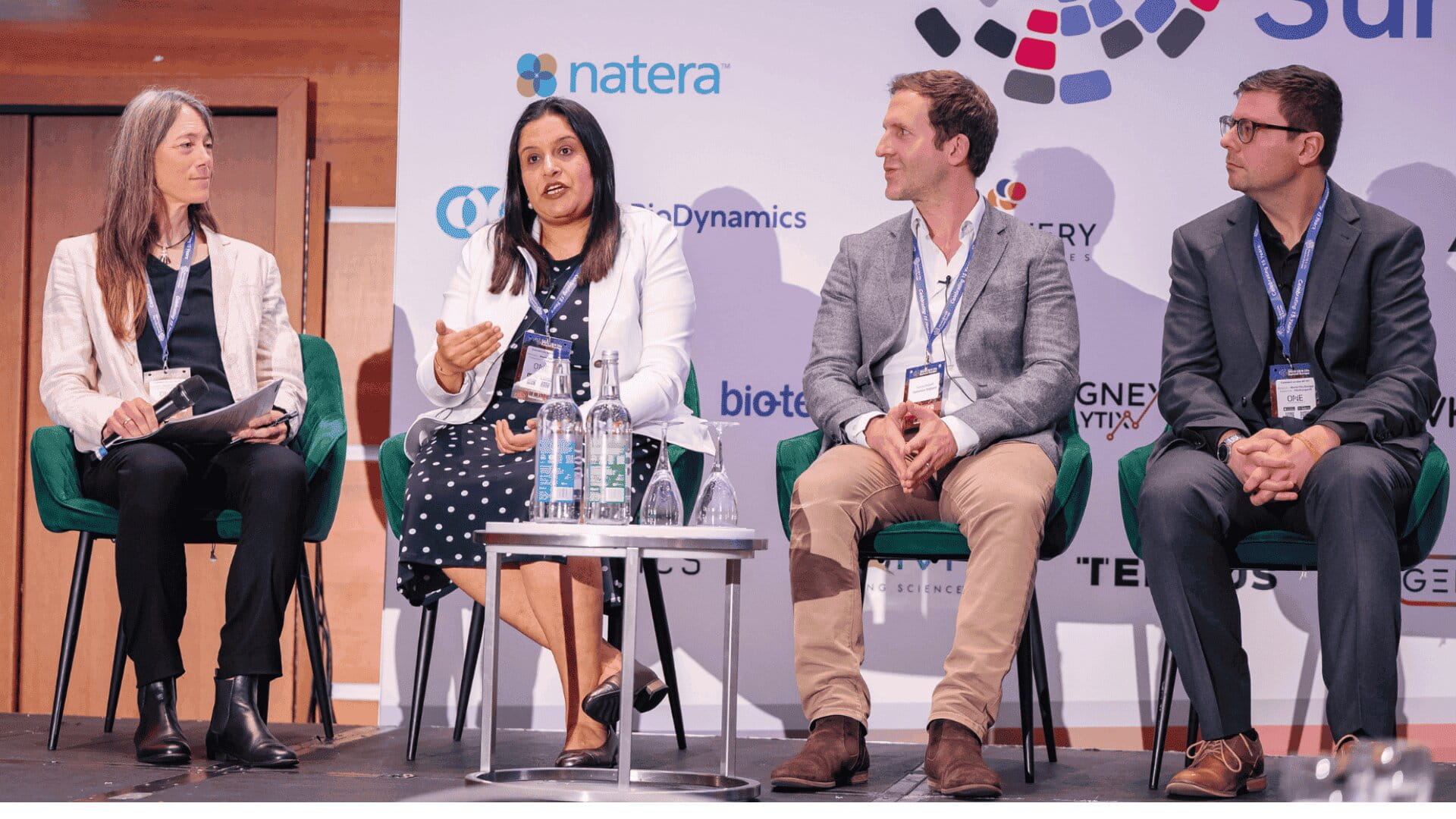
Explore the Agenda
Hear the latest industry breakthroughs in T-Cell Engager development and gain exclusive modality and platform insights during our packed agenda.
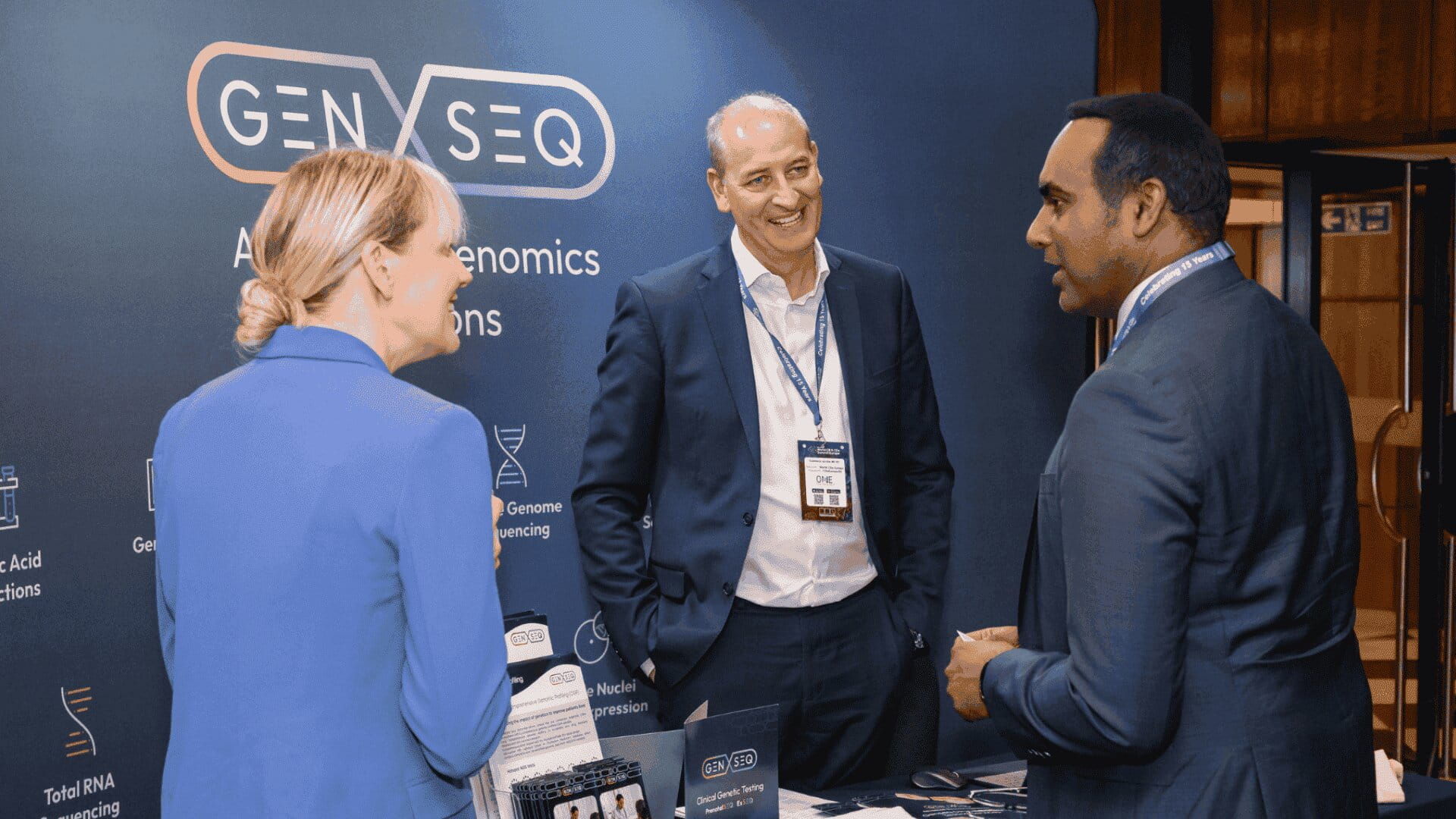
Partner With Us
Position yourself as the go-to service provider of the rapidly progressing T-Cell Engager landscape to ensure your brand is at the heart of deals in this evolving space.

Join Biopharma Experts
Be part of the most critical conversations shaping the future of solid tumor and autoimmune therapy, where you can connect with like-minded experts across every stage of drug development.